Amarillo Homeowner Guide
Why Is My HVAC Making That Noise? A Sound-by-Sound Guide for Amarillo Homes
Published September 8, 2026 · Last reviewed · Amarillo, Canyon & Bushland, TX
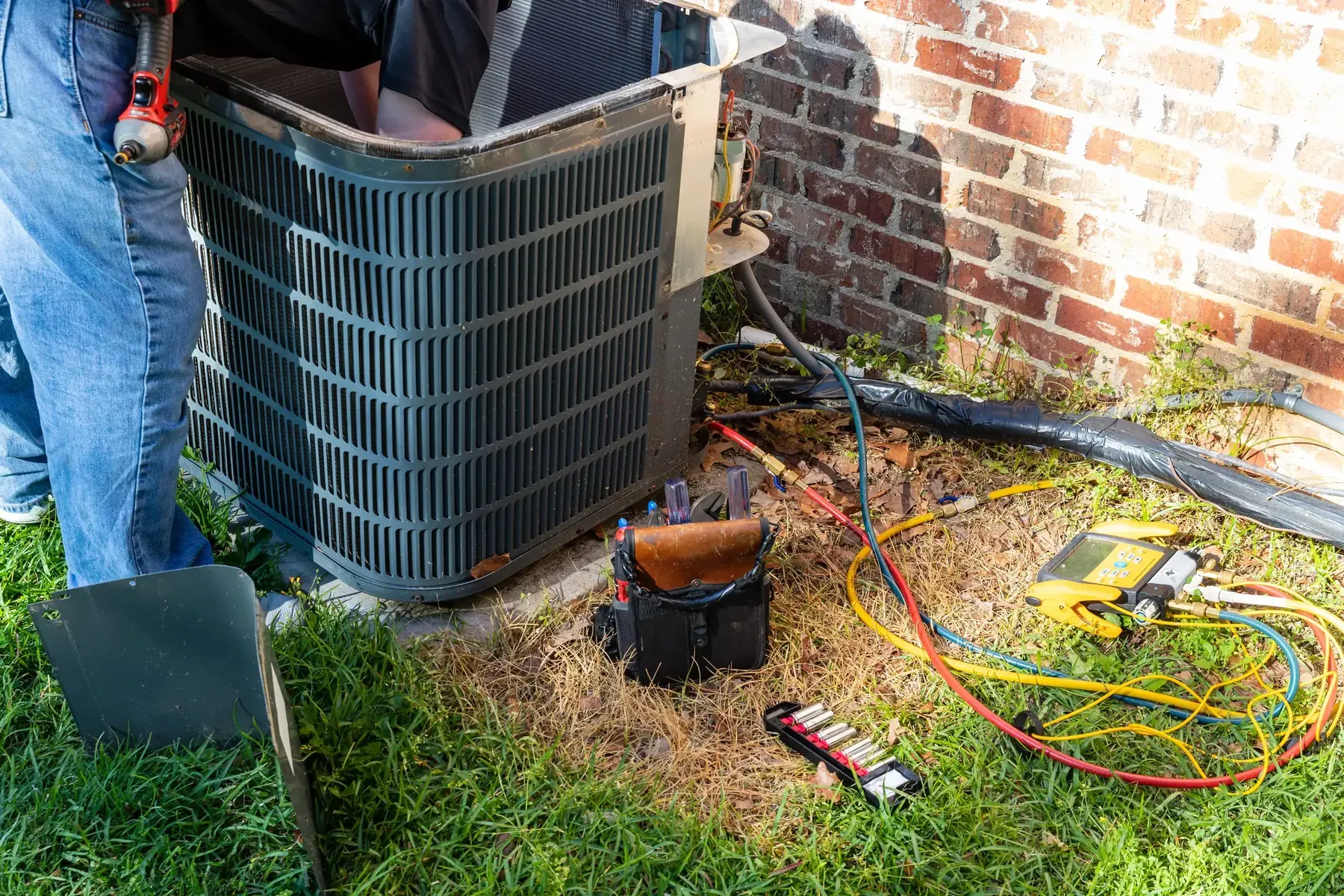
The short answer
As of September 2026, the AC noises Amarillo, TX homeowners report most are a buzz or hum with no fan (usually a $150–$400 capacitor), a rhythmic tick or wobble from the outdoor unit (a bent fan blade, common after Panhandle hail; a fan motor runs $300–$700 if it's been run that way too long), a hiss (a refrigerant leak, $400–$1,600), and a grind or scream from the compressor ($1,500–$3,000 — turn it off). Most other clicks, rattles, and whooshes are normal or minor.
Palo Duro Air Repair · (806) 555-0100 · matching Amarillo-area homeowners with independent, TDLR-licensed HVAC contractors.
A new noise from the air conditioner is the sound of a decision: is this “turn it off right now,” “call this week,” or “that’s just what it does”? Most guides on this topic are national and generic. This one is written for Amarillo, where two hail seasons a year and a lot of wind-blown grit produce a specific set of sounds that other places rarely hear — and it ties each sound to what the repair actually costs here, using the same figures as the Amarillo AC repair cost guide.
The quick table
| Sound | Where | Most likely cause | Urgency | Typical Amarillo fix & cost |
|---|---|---|---|---|
| Buzz / hum, fan not spinning | Outdoor unit | Failed capacitor | Turn off, call this week | Capacitor, $150–$400 |
| Rhythmic tick / wobble, speeds up with fan | Outdoor unit | Bent fan blade (hail), debris | Turn off, call soon | Blade (inexpensive) or fan motor, $300–$700 |
| Scraping from the top | Outdoor unit | Grille bent into fan (hail) | Turn off now | Grille/blade; often within a $75–$150 visit |
| Hiss | Outdoor unit / lines | Refrigerant leak | Call this week; turn off if not cooling | Leak repair + recharge, $400–$1,600 |
| Grind / scream / hard knock at start | Outdoor unit | Compressor failing | Turn off now | Compressor, $1,500–$3,000 — or replace |
| Rapid clicking, no start | Outdoor unit / thermostat | Contactor or control | Call this week | Contactor, $150–$400 |
| Single click at start/stop | Anywhere | Relay/contactor operating | Normal | — |
| Squeal | Indoor air handler | Blower belt or bearing | Call this week | Blower motor/belt; ask for a quote |
| Rattle | Outdoor cabinet / ducts | Loose panel, screws, debris, crushed fins | Low; check yourself | Tighten; fin comb if hail |
| Bang / thump at start & stop | Ducts | Duct oil-canning, expansion | Usually normal | Duct bracing if it bothers you |
| Gurgle / bubbling | Indoor unit or lines | Condensate drain, or low refrigerant | Low–medium | Drain clear; leak check if with poor cooling |
| Whoosh / whistle | Registers, return | Airflow restriction, dirty filter | Low | New filter; open registers |
Sound by sound
Buzzing or humming with no fan
Stand by the outdoor unit while it’s trying to start. If you hear a steady electrical hum or buzz and the fan on top isn’t spinning, the run capacitor has almost certainly failed. This is the single most common AC repair in Amarillo and one of the least expensive — $150–$400 — but it becomes expensive if you let the system keep attempting to start, because the compressor is trying to run without its starting boost. Turn the system off at the thermostat and schedule a repair.
Capacitors fail more in heat, which is why so many go in July. A technician can test one in minutes with a meter; if you have a pre-season inspection done (see the summer prep guide), ask them to check its reading and replace it if it’s drifting.
Rhythmic ticking, wobbling, or a scrape from the top of the unit
This is the Amarillo-specific one. Hail hits the top of the condenser first: the grille takes the impact and can bend down toward the fan blades, and the blades themselves — thin stamped metal — bend. The result is a tick that speeds up and slows down with the fan, a visible wobble if you watch the fan spin, or an outright scraping if a blade is contacting the grille.
Turn it off. A bent blade or a pushed-in grille is a cheap fix on its own, but a motor forced to spin out of balance for weeks fails, and a condenser fan motor is $300–$700. If you had a storm in the last few weeks, this is the first thing to check. The hail-damage guide covers what else to look for while you’re out there.
Hissing
Refrigerant escaping through a pinhole in a coil, a cracked line, or a bad Schrader valve makes a hiss — sometimes steady, sometimes only when the system cycles. Outdoors it’s not a safety hazard in open air, but it is the sound of your cooling capacity leaving. The system will progressively cool less, may ice up, and can eventually damage the compressor by running low. A leak repair and recharge runs $400–$1,600 in Amarillo, with the refrigerant type doing most of the work in that spread — R-410A at $10–$25 per pound versus R-22 at $90–$150 per pound. If your system is pre-2010, read the R-22 guide before authorizing a recharge.
A hiss inside at the air handler can be the expansion valve metering refrigerant (often normal) or air leaking from a duct seam near the unit (a sealing job).
Grinding, screaming, or a hard knock at start-up
This is the one that should send you to the thermostat immediately. A compressor with failing bearings grinds; one with internal pressure problems screams; one with a failing start winding makes a loud knock or slam when it tries to kick on, often followed by the breaker tripping. Every minute it runs makes the outcome worse. Turn it off.
Compressor replacement costs $1,500–$3,000 in Amarillo. On a system under about 10 years old with the compressor under manufacturer parts warranty, it can be worth doing. On a system 12 or more years old, that money usually belongs in a replacement instead — the repair-vs-replace guide walks through the math with local examples.
Clicking
One click when the thermostat calls and one when it’s satisfied is the contactor pulling in and dropping out. That’s normal. Rapid, repeated clicking with no start — sometimes with a chatter — is a contactor whose contacts are pitted or a low-voltage problem starving it. Contactor replacement sits in the same $150–$400 band as a capacitor, and technicians often replace both together on an older unit.
Squealing
A high-pitched squeal from the indoor air handler is usually the blower — a worn belt on older belt-drive units, or a bearing on a direct-drive motor. It’s not an emergency, but a seized blower motor stops all airflow, so schedule it. Ask for a quote; blower motors vary more by system than condenser parts do.
Rattling
Check the easy things first: loose screws on the outdoor cabinet panels, a piece of debris (a twig, a wasp nest) inside the cabinet, a loose duct section in the attic. In Amarillo, add crushed coil fins from hail — flattened fins can vibrate against each other and produce a buzz or rattle that wasn’t there before the storm. Tightening panels and clearing debris are homeowner jobs (power off at the disconnect first). Fin combing is a technician job, usually folded into a $75–$150 diagnostic visit.
Banging or thumping at start and stop
Sheet-metal ductwork flexes when the blower starts and stops — a single “oil-can” pop is normal, if annoying. A bang from the outdoor unit while running is different: a loose fan blade, a broken compressor mounting spring, or debris being struck. Turn it off and have it looked at.
Gurgling or bubbling
At the indoor unit, this is usually condensate draining or a partially clogged drain line. With poor cooling, it can also be refrigerant bubbling through a restriction on a low system. Clear the drain first; if cooling is also weak, have the charge checked.
Whooshing or whistling
Air moving too fast through too small an opening: a dirty filter, a closed or blocked return, or an undersized return grille. Change the filter, open registers, and see the not-cooling guide for the full airflow checklist.
After a hailstorm: the three sounds to listen for
Because it comes up so often here, a short checklist for the first run after a spring or fall storm:
- Scraping from the top — grille bent into the fan. Turn off.
- Tick or wobble that tracks fan speed — bent blade. Turn off.
- Buzz or rattle that wasn’t there yesterday — crushed fins vibrating. Not urgent; get them combed at the next visit.
And one thing to look for that makes no sound at all: oily residue on the coil fins, which means a stone punctured the tubing and refrigerant oil is weeping out. That’s a leak, whether or not you can hear it.
When a noise is an emergency
Turn the system off at the thermostat and, if it keeps running or you smell burning, at the breaker, for any of these: grinding or screaming from the compressor; a burning or electrical smell; smoke; a breaker that trips again after one reset; metal-on-metal from the outdoor unit. Then decide whether it needs same-night service or can wait for morning — the emergency guide covers that call and what after-hours service ($140–$250+ per hour) costs.
Get it diagnosed
Describe the sound as precisely as you can — where it’s coming from, whether it tracks the fan, whether it started after a storm — and Palo Duro Air Repair will match you with an independent, TDLR-licensed HVAC contractor serving Amarillo, Canyon, or Bushland who can put the right parts on the truck. A normal-hours diagnostic runs $75–$150. Verify any contractor at the TDLR license lookup. No obligation to hire.
FAQ
Why Is My HVAC Making That Noise? A Sound-by-Sound Guide for Amarillo Homes: Questions Amarillo Homeowners Ask
Why is my outdoor AC unit buzzing but not turning on?
A buzz or hum from the outdoor unit with the fan not spinning almost always means a failed run capacitor — the component that gives the fan and compressor motors their starting kick. It's the most common AC repair in Amarillo at $150–$400. Turn the system off at the thermostat until it's fixed; repeated failed starts stress the compressor.
Why is my AC making a ticking or clicking sound?
A single click when the system starts or stops is the contactor or thermostat relay and is normal. Rapid, repeated clicking with no start points to a failing contactor or a control problem. A rhythmic tick that speeds up with the outdoor fan is usually a fan blade striking something or a blade bent out of balance — common after Amarillo hail — and should be looked at before it damages the $300–$700 motor.
Is a hissing sound from my AC dangerous?
A steady hiss from the outdoor unit or the refrigerant lines usually means refrigerant escaping through a leak, which isn't an immediate safety hazard in a well-ventilated outdoor space but does mean the system will soon stop cooling and can damage the compressor if run low. A hiss from inside the house at the air handler can also be an expansion-valve or duct issue. Either way, a leak repair and recharge runs $400–$1,600 in Amarillo.
What does a bad AC compressor sound like?
A failing compressor typically grinds, screams, or produces a loud hard-start knock when it tries to kick on, sometimes followed by the breaker tripping. Turn the system off — continuing to run it can turn a borderline repair into a certain replacement. Compressor replacement costs $1,500–$3,000 in Amarillo, which on a unit 12 or more years old usually makes it a repair-versus-replace decision.
Why does my AC bang when it starts or stops?
A single thump or bang at start-up and shutdown is often just ductwork expanding and contracting (oil-canning) or the compressor's normal mounting movement, especially on older systems. Repeated banging from the outdoor unit while running suggests a loose fan blade, a broken mounting spring, or debris inside the cabinet — turn it off and have it inspected.
Can hail cause new noises from my air conditioner?
Yes — hail is one of the most common causes of new AC noises in Amarillo. Stones bend the top grille down into the fan's path (a rhythmic scraping), bend a fan blade (a wobble or tick that gets faster with fan speed), and crush coil fins so they vibrate or rub (a buzz or rattle that wasn't there before the storm). After a spring or fall hailstorm, inspect the top of the unit before running it for long.
Keep reading
Related Amarillo AC guides
Ready for a real quote from a local Amarillo HVAC pro?
Tell us what your system is doing and we’ll match you with an independent, TDLR-licensed contractor serving Amarillo, Canyon, and Bushland. No obligation to hire.